- Dress warmly. If it’s cold outside, keep yourself warm with gloves over hands that ache and added layers over knees and legs. “I’m one of those people who loves to wear dresses and skirts,” says Snow, “so when it’s cold I also wear tights or leggings to stay warm.”
- Exercise inside. A study published in the Journal of Physical Activity and Health that measured physical activity in 241 adults with arthritis living in Chicago (a city known for its bitterly cold winters) found that the amount of sedentary time increased by over three hours between November and June. But while it's understandable to want to avoid winter chill, people with joint pain should still stay active — and the best way is with an indoor exercise plan. Snow has a treadmill and an elliptical trainer at home. Libman recommends walking the mall.
- Enjoy warm water. Swimming in a heated pool is both great exercise and soothing to joints. You can also get relief from warm baths. Just don’t go right out into the cold after your soak. Let your body temperature normalize a bit first.
- Supplement vitamin D. Being deficient in vitamin D might make osteoarthritis worse, warns Libman. You are less likely to get enough vitamin D in the winter, so this is a good time to take a supplement or make sure your diet is vitamin D-rich.
How to Be Supplement Savvy
- Stay safe. Particularly when the weather turns icy, people with arthritis need to protect their joints from further damage. If you’re going outside, pick solid, supportive shoes with good treads and try to walk on a surface that doesn’t look icy, advises Libman.
- Try a glucosamine-chondroitin supplement. Although there are no herbal supplements that have been proven to provide arthritis pain relief in clinical studies, Libman says some of her patients do report relief from these supplements. “What I tell my patients is, if you can afford to pay for it and you want to give it a try, it seems to be a low-risk thing for pain,” she says.
- Add fish oil. “Omega-3 fatty acids do have some benefit because they seem to reduce the level of inflammation,” says Libman. You need about 2,000 to 3,000 milligrams a day to get benefits. Make sure to let your doctor know if you try omega-3s, as they can increase the risk of bruising or bleeding.
- Take NSAIDs. Even if, like Snow, you prefer to treat your joint pain with lifestyle changes rather than medication, it’s okay to take an over-the-counter pain reliever when your joint pain is worse due to the weather.
- Get a massage. Yes, you have permission to indulge yourself. “A lot of what’s happening in terms of pain is, some is emanating from the joint and some from the muscles around the joint,” explains Libman. Massage can help ease those cramped muscles.
- Go under the needle. Acupuncture is another option for those willing to consider non-traditional treatments. “It does seem patients derive some benefit with regard to pain,” says Libman. You may need several sessions to get the joint pain relief you seek.
Entrepreneur, Professional Speaker, Chiropractor and Clinical Nutritionist Dr. Peloquin's office Hands of Gold Chiropractic has been helping suffering people in Bay Ridge Brooklyn since 2004.
Showing posts with label Brooklyn chiropractor. Show all posts
Tuesday, January 6, 2015
Winter and Pain
Though there’s not much scientific data to support the joint pain and weather connection, you can still use these arthritis pain relief tips when your aching joints act up in winter:
Wednesday, October 9, 2013
IT Band Stretches, Treatment and Prevention
Hip or knee pain, or both. Specifically, pain on the outer side of the knee where the bone bumps out above the joint, or on the outer side of the hip. The pain usually starts after 10 minutes of running. Walking usually causes no pain.
What’s Going On In There?
The iliotibial band (ITB) is a thick tendon that runs the length of and connects the tensor fascia lata muscle—which starts on the outer side of the hip—to the outer side of the tibia, the major bone in the lower leg.
Here’s how the pain happens: A small, fluid-filled sac called a bursa sits between the tendon and the outside of the femur near the knee. You also have a bursa at the hip joint. When the ITB is tight, it increases the tension on the outer sides of the hip and knee. The ITB then pinches these two sites and the bursa (one or both) swells. Over time, the bursa becomes enlarged—big enough to cause pain every time you begin to run (which is why pain usually starts within 10 minutes of activity).
Fix it
• Roll it: A 6-by-36-inch foam roller is the best tool for stretching the ITB. Lie on your side with the roller under your leg and roll it from your hip to your knee (see right), using your body weight to knead the area. The pressure will help loosen the tendon and the fascia, almost like a self-massage. Do this at least once a day for several minutes, and make it a permanent part of your exercise activity.
• Beef up your glutes and hips. Weak butt and hip muscles contribute to ITB impingement syndrome. Make sure your lower-body work includes squats, especially single-leg squats, as well as multidirectional lunges (for more ideas, see exercises and stretches below).
Prevent It
Build up your glutes to reinforce the body’s largest and potentially most powerful muscle group. The stretches and exercises here all help build up your glutes and hip flexors, and can be added to any workout.
Lying Glute StretchLie face-up on the floor with your knees and hips bent. Cross your right leg over your left so that your right ankle sits across your left thigh. Grab your right knee with both hands and pull it toward the middle of your chest until you feel a comfortable stretch in your glutes. Hold for 30 seconds, then repeat on the opposite side. Repeat twice for a total of three sets—and several times a day if you’re really tight.
Lateral Band WalksPlace both legs between a mini-band and position the band just above your knees. Take small steps to your right for 20 feet. Then sidestep back to your left for 20 feet. That’s one set.
Hip Raise
Lie face-up on the floor with your knees bent and your feet flat on the floor. Place your arms out to your sides at 45-degree angles, your palms facing up. Raise your hips so your body forms a straight line from your shoulders to your knees. Squeeze your glutes as you raise your hips. Make sure you’re pushing with your heels. To make it easier, you can position your feet so that your toes rise off the floor. Pause for five seconds in the up position, then lower your body back to the starting position.
Brooklyn Chiropractor, Dr. Jason J. Pleoquin at The Hands of Gold Chiroractic can help you overcome a ITB injury using a combination of massage, stretching, vibration therapy, graston technique, Cold Laser Therapy and Active Release Technique,
For more information on Dr. Peloquin, please feel free to visit his website www.HandsofGoldChiropractic.com
Thursday, January 3, 2013
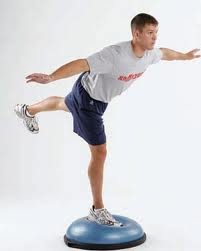
Proprioception - Making Your Body Smarter
Chiropractic Care Helps Your Body Be Smarter
Your body's awareness of where it is in three dimensions is critical to your ability to function effectively in the world. This awareness depends on proprioceptors. These specialized nerve endings are part of your nervous system - your body's master system.
Nerve signals are transmitted from proprioceptors in joints and muscles, along nerve pathways, to spinal nerves. Spinal nerves connect to the spinal cord, and from there signals are transmitted to the brain. But spinal nerves are a potential bottleneck to the free flow of information. These nerves may become irritated or inflamed, blocking accurate information from reaching the brain and accurate instructions from reaching the rest of the body.
Chiropractic care helps keep your body free of nerve interference. By correcting spinal misalignments, chiropractic care helps remove nerve interference and ensures a free flow of information from the brain, to the spinal cord, to all the body's cells, and back again. Optimal health and well-being are the result.
We usually don't think of our bodies in terms of their being "smart." For example, we walk to the corner store without giving a single thought to the complex mechanics involved in getting there and back. But behind the scenes there's plenty going on and your body's "IQ" has a lot to do with your success in accomplishing everyday tasks.
Proprioception is one of those background physical processes that make up your body's total IQ. Proprioceptors are specialized nerve endings located in your muscles and joints that inform your brain about your body's position in three-dimensional space. You're able to write legibly because proprioceptors are sending instantaneous data about the angles of the small joints of your fingers and wrists as your pen moves across the page. You're able to run on the beach because proprioceptors are continuously sending signals to your brain about the changing shape of the uneven surface of the sand.
Without these specialized nerve endings, we'd never be able to hit a baseball, throw a Frisbee, or drive a car. But proprioceptors can be smart or less than that. It all depends on how well-trained they are. One person out for a stroll might trip over a crack in the pavement and suffer a badly sprained ankle. Another person might trip over the same crack, even badly turning over their ankle in the process, and keep on walking without even a trace of a limp.
The difference between injury and non-injury is the level of proprioceptor training, and this level usually is related to whether you're doing regular exercise. Exercise trains your muscles and joints to adapt to varying kinds of stresses (weight-bearing loads) throughout a variety of positions (the full range of motion of those joints). As a result, trained proprioceptors can withstand a high degree of stress (such as a sudden twisting of an ankle). The untrained ankle, possibly the ankle of a person who hasn't done much walking, running, or bike riding in the last 5 years, will be damaged by an unusual and unexpected stress. The result is an ankle sprain of varying severity and possibly a broken ankle.
Similarly, it is well known that older adults experience more frequent falls than do younger adults. Part of the explanation involves proprioception. Many older adults don't engage in regular exercise. Proprioceptive function decreases, changes in level or surface aren't recognized quickly by the person's feet and ankles, and the person falls.
It's easy to see that the effort to maintain your body's IQ is time very well spent. The fastest way to boost this skill set is by doing regular exercise. All kinds of exercise provide benefit, so the best exercises are the ones that have some interest for you personally. Optimally, a person is doing both strength training and cardiovascular exercise. As always, the key to long-term health and wellness is consistency.
Fore more information on Hands of Gold Chiropractic and their office please log onto Hands of Gold Chiropractic or visit them on Facebook
Thursday, February 16, 2012
Hands of Gold Chiropractic Voted Best In Brooklyn
Bay Ridge Brooklyn chiropractor, Dr. Jason Peloquin and staff at the Hands of Gold Chiropractic have won "Best Chiropractor in the Boro" by The Home Reporter, The Brooklyn Spectator and The Sunset News.
The contest ran from late December to early Februrary. During this time, voters logged into The Home Reporter's website and casted their nomination for the Best of the Boro contest. After the nomination period had ended, all of the users were be given the chance to vote on their favorite picks during the second round.
Dr. Peloquin was very excited about the good news and exclaimed, "It is a true testament to what we are trying to accomplish for our community. Individual personalized attention, quality care and long lasting results!"
Hands of Gold Chiropractic offers a wide array of alternative therapies. Patients seeking treatment at their Bay Ridge location are able to consult or be treated by a licenced acupuncturist and massage therapist. Nutritional counseling as well as non-surgical spinal decompression are also offered.
For more information on Dr. Peloquin and his office, Hands of Gold Chiropractic, please feel free to log onto his website http://www.handsofgoldchiropractic.com/ or you can catch up on their latest blog and health related topics by liking their Facebook page Hands of Gold On Facebook Link.
Tuesday, February 14, 2012
HANDS OF GOLD CHIROPRACTIC NAMED BEST OF THE BORO
Dr. Jason peloquin and the Hands of Gold Chiropractic team have won the Best of The Boro Contest sponsored by The Home Reporter, Brooklyn Spectator and Sunset News.
Tuesday, January 31, 2012
Core Fitness - What Is It and What Is It Good For?
What exactly is the "core" and what are you training when you train it? Your core muscles are your four abdominal muscle groups - the transversus abdominis, internal obliques, external obliques, and rectus abdominis. Back muscles, too, are included in the core group - specifically the erector spinae, longissimus thoracis, and multifidus. The importance of the core muscles is their ability to provide a "center" or focus for the physical work your body is doing. If your core is not fit other muscles will have to take over, leading to the likelihood of strains, sprains, and other injuries.
Who even knew we had a core? Plenty of people did, long ago, but in those days no one talked about a "core". For many decades football coaches, ballet instructors, and gymnastics coaches trained their athletes in vigorous and strenuous techniques that all focused on core strength. High school gym teachers knew about the core. Remember squat thrusts, jumping jacks, and push-ups? All those ancient exercises (that we used to groan and moan about) train deep core muscles. We were doing core fitness before there was "core fitness".
Why do we need core fitness today? More and more our work involves sitting down. We stare at computer screens for eight hours a day. Instead of doing physical work such as farming or building, we type on a keyboard and talk on a cell phone. The long-term result is that muscles, tendons, and ligaments lost their integrity. Tight neck muscles, tight lower back muscles, and weak abdominal muscles are the result, and these issues lead to more serious problems such as chronic headaches, cardiovascular stress, impaired digestion, and depression. We need fitness activities that start building us back up again, and the right place to start is at the center - by engaging in core fitness.
The best thing about core fitness is that you don't need any equipment. You could get a mat and a physioball, but those items are optional. Take a yoga class. Take a Pilates class. Learn a few core exercises and begin to do them several times a week. You'll soon begin to notice that you feel better, in general. You have more energy. You're sleeping better. Your mood is improving. All due to a few squats, a few planks, and a few push-ups. That's a pretty good deal.
Thursday, January 5, 2012
Four Resolutions for a Healthier Back
A Happy And Healthy 2012!
Change your habits to change your health.
Eat more vegetables. Stress less. Take the kids out to the park more often. You may already have a long list of resolutions for the new year. This year, honor your spine, too. With the help of your doctor of chiropractic, these simple steps can promote a healthier back for the new year.
Consider replacing your pillow or mattress.
Do you wake up with aches and pains? It could be time to purchase a new mattress or pillow. The American Chiropractic Association (ACA) recommends finding a mattress that evenly supports your whole body. There should be no gaps between you and the mattress when you lie down. When choosing a pillow, select one that supports your head and neck in alignment with the rest of the spine, whether you sleep on your side or back. Keep in mind that what works for your partner may not work for you— there isn’t one mattress or pillow that fits everyone. Simple adjustments, such as adding foam padding, can help tremendously.
Re-evaluate your posture at work.
Americans spend an average of 44 hours at work every week— often behind a desk. To avoid poor posture that can lead to tension, back pain, and joint problems such as carpal tunnel syndrome, check that your chair is the right size and adjusted correctly, says the ACA. Do your feet rest comfortably on the ground? Does the chair offer lumbar support? Are you able to tilt or swivel easily while performing tasks at your desk? Also, be sure you have adequate light (so that you aren’t straining to see documents or a computer screen), adjust your computer monitor so that it is at eye level, and wear a headset for longer telephone conversations. And don’t forget to take frequent breaks and stretch throughout the day.
Learn how to lift correctly.
Many back injuries are caused by improper lifting of items such as luggage, backpacks or briefcases, storage boxes, or even groceries. But knowing how to lift properly can prevent serious injury. First and foremost, don’t bend from the waist. Keep your back straight, and squat to reach the item. Then, keep it close to your body as you lift, and avoid twisting motions. When traveling, check all bags that weigh more than 10 percent of your body weight.
Eat right and exercise well.
Eating a balanced diet and getting regular exercise helps your body stay toned and tension-free— and promotes a healthy weight and a happier spine. Smart exercise and a good diet can also prevent osteoporosis, which add strength to your spine and keep you from getting injured.
Sunday, August 14, 2011
Above Down - Inside out!
"Above-down, inside-out" is a poetic coinage by Dr. B.J. Palmer, one of the founders of the field of chiropractic. "B.J.", as he has been affectionately known by chiropractors for almost 100 years, was describing the inner workings of the brain and spinal cord, the complex nerve system connected to all parts of the body, and the cells, tissues, and organs comprising the bulk of human physiology.
In his inimitable style, Dr. Palmer was addressing many deep, complex phenomena all at once. From a high-level viewpoint, he was describing how the central nervous system communicates with the rest of the body. One major conclusion is that the brain (as the originator of nerve signals that flow to the spinal cord and from there to the organs, tissues, and cells) is the master controller of all the other systems. The gastrointestinal, endocrine, cardiopulmonary, and musculoskeletal systems are all ultimately controlled and regulated by activities within the brain.
More than this, "B.J." was pointing directly to an organizing intelligence responsible for all the operations of living tissue. This concept, "Innate Intelligence", was propounded by his father, Dr. Daniel David Palmer. "B.J." expanded, publicized, and promoted the idea of Innate Intelligence as he helped the field of chiropractic grow into the second largest healing arts profession in the United States.
In the above-down, inside-out paradigm, Innate Intelligence is an intrinsic guiding and instructional force that maintained ongoing health and healing. Innate Intelligence knows how much oxygen and other nutrients a cell needs to meet its energy requirements. Innate Intelligence knows how to direct B lymphocytes to build a new antibody to fight a previously unencountered bacteria or virus. Innate Intelligence knows how much insulin should be released by beta cells in the pancreatic islets of Langerhans in order to properly use the carbohydrates you ingested during your last heart-healthy meal.
But disorder within the nerve system can interfere with the body's ability to carry out the instructions of Innate Intelligence. Symptoms, pain, disorders, and disease ensue from such nerve interference. Chiropractic care helps restore balance within the nerve system, thus helping restore health and well-being.
In his inimitable style, Dr. Palmer was addressing many deep, complex phenomena all at once. From a high-level viewpoint, he was describing how the central nervous system communicates with the rest of the body. One major conclusion is that the brain (as the originator of nerve signals that flow to the spinal cord and from there to the organs, tissues, and cells) is the master controller of all the other systems. The gastrointestinal, endocrine, cardiopulmonary, and musculoskeletal systems are all ultimately controlled and regulated by activities within the brain.
More than this, "B.J." was pointing directly to an organizing intelligence responsible for all the operations of living tissue. This concept, "Innate Intelligence", was propounded by his father, Dr. Daniel David Palmer. "B.J." expanded, publicized, and promoted the idea of Innate Intelligence as he helped the field of chiropractic grow into the second largest healing arts profession in the United States.
In the above-down, inside-out paradigm, Innate Intelligence is an intrinsic guiding and instructional force that maintained ongoing health and healing. Innate Intelligence knows how much oxygen and other nutrients a cell needs to meet its energy requirements. Innate Intelligence knows how to direct B lymphocytes to build a new antibody to fight a previously unencountered bacteria or virus. Innate Intelligence knows how much insulin should be released by beta cells in the pancreatic islets of Langerhans in order to properly use the carbohydrates you ingested during your last heart-healthy meal.
But disorder within the nerve system can interfere with the body's ability to carry out the instructions of Innate Intelligence. Symptoms, pain, disorders, and disease ensue from such nerve interference. Chiropractic care helps restore balance within the nerve system, thus helping restore health and well-being.
Thursday, July 7, 2011
CHIROPRACTIC IN THE EYES OF THE AMA
This is just a reprint of a small history lesson written for the AMA by a Chiropractor.
Chiropractic’s Fight for Survival
Despite generations of opposition from organized medicine, chiropractors, unlike most other groups of professionals, maintained an identity distinct from the practice of medicine.
Although the chiropractic profession now occupies a largely mainstream place in the health care spectrum of the United States, this has not always been the case. From its formation in 1895 by founder Daniel David (D. D.) Palmer [1], the chiropractic profession faced a plan of containment and elimination by the American Medical Association (AMA) that continued for nearly a century. It took an antitrust lawsuit filed against the AMA in 1976 to reveal the magnitude and scope of the AMA’s plan. Despite generations of organized medical opposition, chiropractors did what most other groups of professionals failed to do: they maintained a separate and distinct identity from the practice of medicine while growing in an otherwise hostile environment created by the AMA and its component state associations [2].
During the 1800s, there were a variety of medical sects vying for market share in the United States. Homeopaths, eclectics, naturopaths, and osteopaths, as well as the so-called “regular” orthodox medical practitioners, all had a stake in shaping the dominant health care paradigm [2]. The medical practitioners organized the American Medical Association in 1847 with the primary goals of standardizing medical education and instituting a program of medical ethics [3]. By 1849, the AMA had taken on the role of investigating the various competing sects of medicine and challenging them on the basis of their ethics [3]. The AMA took the position that the other forms of medicine, including the newly discovered chiropractic profession, were unethical and “unscientific.” Many authors, however, have made the argument that the AMA’s intent was to decrease competition for financial reasons rather than to protect the public from unethical practitioners [4, 5].
Medical doctors from this fledgling group broadcast the message that their practice alone was scientifically based, despite the fact that their approach to medicine was no more scientific than that of the professions they were competing with [6]. This claim, however, was an important first step in marginalizing other professions as “unscientific” or “pseudoscientific” and allowed this sect of medicine to organize and professionalize quickly and eventually exert a massive influence on all aspects of health care policy in this country for generations [6]. Not coincidentally, the AMA’s efforts resulted in the transformation of American medicine from a modest, even menial profession into one of sovereignty, power, and financial affluence [5].
By convincing state legislators that their profession was scientific while all others were not, the AMA and its state member associations were able to gain protection in the form of endorsement for educational programs and laws that limited “irregular” practice. The system of schools and hospitals, as well as the legislation protecting them, led to a “golden age of doctoring” that lasted until the 1970s [2]. Orthodox or “allopathic” medicine enjoyed virtually complete dominance of the health care market in the United States. With the exception of chiropractors, competing professions shrank to nonexistence or were absorbed into the orthodox medical profession, as in the case of osteopaths [4].
From its inception, chiropractic was looked upon as a menace by medical authorities. Palmer’s first chiropractic patient was a partially deaf janitor named Harvey Lillard, whose hearing improved dramatically under Palmer’s care. Following his development of chiropractic, Palmer used both incredible claims of cures as well as an antimedical platform to advertise his practice. Neither endeared him to the medical authorities in Iowa or Illinois [7].
Palmer intended to keep chiropractic techniques a family secret, but a near-fatal railroad accident caused him to change his plans, and he established the first chiropractic school, now known as Palmer College of Chiropractic, in 1897 [1, 8]. A good number of Palmer’s early students were medical doctors or had been trained in other health care disciplines prior to learning chiropractic [9]. Palmer established a unique theory about the nature of disease and emphasized the role of the patient’s body and its innate healing ability, rather than doctors’ treatments, as the key to health.
Chiropractic’s first challenge as a profession was the licensure laws that protected medical practice. While there were provisions in some states for chiropractors to practice as “irregulars,” in most states chiropractors faced the possibility of arrest and imprisonment for “practicing medicine without a license.” The first known case of this occurred in 1905, when Wisconsin chiropractors E. J. Whipple and G. W. Johnson were convicted at the urging of A. U. Jorris, DO, the first osteopath to be elected to Wisconsin’s board of medical examiners [9, 10]. In fact, an early issue of the Journal of the American Osteopathic Association commended “Dr. A. U. Jorris in his fight against chiropractors” [11]. D. D. Palmer himself spent 23 days in Scott County jail for the same offense in Iowa in 1906 [8]. Recognizing the need for a protective organization of their own, chiropractic leaders founded the Universal Chiropractors’ Association in 1906, primarily to provide legal representation for chiropractors facing legal persecution.
In 1907, however, Wisconsin v. Morikubo found the first gap in organized medicine’s armor. Chiropractor Shegataro Morikubo was arrested for practicing osteopathy and medicine without a license. Indeed, there is ample evidence that Morikubo established his practice in LaCrosse, Wisconsin, specifically to test and challenge the precedent set in Whipple and Johnson’s case [10]. The trial ended in the legal establishment of chiropractic as a separate and distinct profession from medicine and osteopathy, largely on the basis of chiropractic’s unique philosophy [12].
Despite this legal precedent, at least 672 chiropractors throughout the country were arrested and jailed for the practice of “medicine” or chiropractic without a license over the next several decades, some many times [13, 14]. Records exposed during the discovery phase of the Chester C. A. Wilk et al. v. AMA et al. case showed that medical doctors were encouraged by the AMA to accuse chiropractors of ethical violations [15]. There was the additional problem that no state had established an official license for chiropractors, so in many cases chiropractors were harassed for practicing without a license that did not exist in the first place.
This changed in 1913, when Kansas became the first state to establish a separate chiropractic board and fully legalize the practice of chiropractic [16]. Other states quickly moved in the same direction. By the end of the 1920s, more than half of the states had legalized chiropractic. Louisiana was the last state to do so in 1974 [13]. Even the state chiropractic boards, however, were not safe from the pressures of the medical associations. State boards were routinely challenged and sometimes dissolved due to pressures on state legislators from the AMA and its state member associations [17]. All the while, the AMA waged an ongoing campaign against chiropractors, using the popular media, medical journals, and any other source that could be used to describe chiropractic as a “cult” [18].
Now that chiropractors could legally practice in most states, the AMA advocated adoption of “basic science” examinations that all doctors had to meet to qualify for a license. These exams were biased heavily toward those with standard medical training—since chiropractors received no training in medical procedures such as surgery and obstetrics. Chiropractors found it nearly impossible to pass the exams or gain licenses in states that adopted them. For example, Nebraska established a Basic Science Board and examination in 1927. From 1929 until 1950, not a single chiropractic license was granted in the state due to the inability of chiropractors to pass these unfair examinations [19]. The basic science examinations kept the number of chiropractors legally practicing in a state to a minimum. It was not uncommon for chiropractors to practice without licenses in states with such restrictions, creating additional opportunities for charges against them.
The AMA’s plan to undermine chiropractic became even more organized with the establishment of the Committee on Quackery in 1963. This AMA committee adopted a plan that was devised in 1962 by the Iowa Medical Society under the leadership of Robert B. Throckmorton. The so-called “Iowa Plan” outlined the “containment of the chiropractic profession” that “will result in the decline of chiropractic.” [15, 18] Action steps outlined in this plan included “encourage ethical complaints against doctors of chiropractic,” “encourage chiropractic disunity,” “oppose chiropractic inroads in health insurance,” and “oppose chiropractic inroads into hospitals,” among others [15, 18]. Joseph Sabatier, chairman of the Committee on Quackery, said that “rabid dogs and chiropractors fit into about the same category…. Chiropractors were nice but they killed people” [20].
The massive scope and methodical nature of this plan were exposed in hundreds of thousands of pages of AMA documents that were brought to light in the 1976 trial Chester C. A. Wilk et al. v. AMA et al, which started one year after the Committee on Quackery was disbanded [21]. AMA writers ghostwrote television and movie scripts, as well as Ann Landers’ widely read newspaper column and any other media outlet that could be used to tarnish the reputation of chiropractic in the public eye. The AMA even encouraged the distribution of antichiropractic materials to high school guidance counselors so they would dissuade interested students from pursuing careers in it [15, 18]. During the 11-year court battle that ensued, the AMA settled three lawsuits by relaxing its position on the referral of patients to chiropractors by medical doctors. In 1980, the AMA revised its Principles of Medical Ethics to reflect this new position, allowing medical doctors to be free to choose the patients they served, the environment they served in, and the other types of practitioners they associated with [22].
In 1987, United States District Judge Susan Getzendanner found the AMA and its codefendants guilty of violating the Sherman Antitrust Act. In her decision, Getzendanner asserted that “the AMA decided to contain and eliminate chiropractic as a profession” and that it was the AMA’s intent “to destroy a competitor” [22].
While it took some years for old habits to fade away, in the current era medical doctors and chiropractors openly refer to each other for diagnostic services, treatment, and co-management of cases, and chiropractors serve alongside medical practitioners in clinics and hospitals all over the country.
--------------------------------------------------------------------------------
Chiropractic’s Fight for Survival
Despite generations of opposition from organized medicine, chiropractors, unlike most other groups of professionals, maintained an identity distinct from the practice of medicine.
Although the chiropractic profession now occupies a largely mainstream place in the health care spectrum of the United States, this has not always been the case. From its formation in 1895 by founder Daniel David (D. D.) Palmer [1], the chiropractic profession faced a plan of containment and elimination by the American Medical Association (AMA) that continued for nearly a century. It took an antitrust lawsuit filed against the AMA in 1976 to reveal the magnitude and scope of the AMA’s plan. Despite generations of organized medical opposition, chiropractors did what most other groups of professionals failed to do: they maintained a separate and distinct identity from the practice of medicine while growing in an otherwise hostile environment created by the AMA and its component state associations [2].
During the 1800s, there were a variety of medical sects vying for market share in the United States. Homeopaths, eclectics, naturopaths, and osteopaths, as well as the so-called “regular” orthodox medical practitioners, all had a stake in shaping the dominant health care paradigm [2]. The medical practitioners organized the American Medical Association in 1847 with the primary goals of standardizing medical education and instituting a program of medical ethics [3]. By 1849, the AMA had taken on the role of investigating the various competing sects of medicine and challenging them on the basis of their ethics [3]. The AMA took the position that the other forms of medicine, including the newly discovered chiropractic profession, were unethical and “unscientific.” Many authors, however, have made the argument that the AMA’s intent was to decrease competition for financial reasons rather than to protect the public from unethical practitioners [4, 5].
Medical doctors from this fledgling group broadcast the message that their practice alone was scientifically based, despite the fact that their approach to medicine was no more scientific than that of the professions they were competing with [6]. This claim, however, was an important first step in marginalizing other professions as “unscientific” or “pseudoscientific” and allowed this sect of medicine to organize and professionalize quickly and eventually exert a massive influence on all aspects of health care policy in this country for generations [6]. Not coincidentally, the AMA’s efforts resulted in the transformation of American medicine from a modest, even menial profession into one of sovereignty, power, and financial affluence [5].
By convincing state legislators that their profession was scientific while all others were not, the AMA and its state member associations were able to gain protection in the form of endorsement for educational programs and laws that limited “irregular” practice. The system of schools and hospitals, as well as the legislation protecting them, led to a “golden age of doctoring” that lasted until the 1970s [2]. Orthodox or “allopathic” medicine enjoyed virtually complete dominance of the health care market in the United States. With the exception of chiropractors, competing professions shrank to nonexistence or were absorbed into the orthodox medical profession, as in the case of osteopaths [4].
From its inception, chiropractic was looked upon as a menace by medical authorities. Palmer’s first chiropractic patient was a partially deaf janitor named Harvey Lillard, whose hearing improved dramatically under Palmer’s care. Following his development of chiropractic, Palmer used both incredible claims of cures as well as an antimedical platform to advertise his practice. Neither endeared him to the medical authorities in Iowa or Illinois [7].
Palmer intended to keep chiropractic techniques a family secret, but a near-fatal railroad accident caused him to change his plans, and he established the first chiropractic school, now known as Palmer College of Chiropractic, in 1897 [1, 8]. A good number of Palmer’s early students were medical doctors or had been trained in other health care disciplines prior to learning chiropractic [9]. Palmer established a unique theory about the nature of disease and emphasized the role of the patient’s body and its innate healing ability, rather than doctors’ treatments, as the key to health.
Chiropractic’s first challenge as a profession was the licensure laws that protected medical practice. While there were provisions in some states for chiropractors to practice as “irregulars,” in most states chiropractors faced the possibility of arrest and imprisonment for “practicing medicine without a license.” The first known case of this occurred in 1905, when Wisconsin chiropractors E. J. Whipple and G. W. Johnson were convicted at the urging of A. U. Jorris, DO, the first osteopath to be elected to Wisconsin’s board of medical examiners [9, 10]. In fact, an early issue of the Journal of the American Osteopathic Association commended “Dr. A. U. Jorris in his fight against chiropractors” [11]. D. D. Palmer himself spent 23 days in Scott County jail for the same offense in Iowa in 1906 [8]. Recognizing the need for a protective organization of their own, chiropractic leaders founded the Universal Chiropractors’ Association in 1906, primarily to provide legal representation for chiropractors facing legal persecution.
In 1907, however, Wisconsin v. Morikubo found the first gap in organized medicine’s armor. Chiropractor Shegataro Morikubo was arrested for practicing osteopathy and medicine without a license. Indeed, there is ample evidence that Morikubo established his practice in LaCrosse, Wisconsin, specifically to test and challenge the precedent set in Whipple and Johnson’s case [10]. The trial ended in the legal establishment of chiropractic as a separate and distinct profession from medicine and osteopathy, largely on the basis of chiropractic’s unique philosophy [12].
Despite this legal precedent, at least 672 chiropractors throughout the country were arrested and jailed for the practice of “medicine” or chiropractic without a license over the next several decades, some many times [13, 14]. Records exposed during the discovery phase of the Chester C. A. Wilk et al. v. AMA et al. case showed that medical doctors were encouraged by the AMA to accuse chiropractors of ethical violations [15]. There was the additional problem that no state had established an official license for chiropractors, so in many cases chiropractors were harassed for practicing without a license that did not exist in the first place.
This changed in 1913, when Kansas became the first state to establish a separate chiropractic board and fully legalize the practice of chiropractic [16]. Other states quickly moved in the same direction. By the end of the 1920s, more than half of the states had legalized chiropractic. Louisiana was the last state to do so in 1974 [13]. Even the state chiropractic boards, however, were not safe from the pressures of the medical associations. State boards were routinely challenged and sometimes dissolved due to pressures on state legislators from the AMA and its state member associations [17]. All the while, the AMA waged an ongoing campaign against chiropractors, using the popular media, medical journals, and any other source that could be used to describe chiropractic as a “cult” [18].
Now that chiropractors could legally practice in most states, the AMA advocated adoption of “basic science” examinations that all doctors had to meet to qualify for a license. These exams were biased heavily toward those with standard medical training—since chiropractors received no training in medical procedures such as surgery and obstetrics. Chiropractors found it nearly impossible to pass the exams or gain licenses in states that adopted them. For example, Nebraska established a Basic Science Board and examination in 1927. From 1929 until 1950, not a single chiropractic license was granted in the state due to the inability of chiropractors to pass these unfair examinations [19]. The basic science examinations kept the number of chiropractors legally practicing in a state to a minimum. It was not uncommon for chiropractors to practice without licenses in states with such restrictions, creating additional opportunities for charges against them.
The AMA’s plan to undermine chiropractic became even more organized with the establishment of the Committee on Quackery in 1963. This AMA committee adopted a plan that was devised in 1962 by the Iowa Medical Society under the leadership of Robert B. Throckmorton. The so-called “Iowa Plan” outlined the “containment of the chiropractic profession” that “will result in the decline of chiropractic.” [15, 18] Action steps outlined in this plan included “encourage ethical complaints against doctors of chiropractic,” “encourage chiropractic disunity,” “oppose chiropractic inroads in health insurance,” and “oppose chiropractic inroads into hospitals,” among others [15, 18]. Joseph Sabatier, chairman of the Committee on Quackery, said that “rabid dogs and chiropractors fit into about the same category…. Chiropractors were nice but they killed people” [20].
The massive scope and methodical nature of this plan were exposed in hundreds of thousands of pages of AMA documents that were brought to light in the 1976 trial Chester C. A. Wilk et al. v. AMA et al, which started one year after the Committee on Quackery was disbanded [21]. AMA writers ghostwrote television and movie scripts, as well as Ann Landers’ widely read newspaper column and any other media outlet that could be used to tarnish the reputation of chiropractic in the public eye. The AMA even encouraged the distribution of antichiropractic materials to high school guidance counselors so they would dissuade interested students from pursuing careers in it [15, 18]. During the 11-year court battle that ensued, the AMA settled three lawsuits by relaxing its position on the referral of patients to chiropractors by medical doctors. In 1980, the AMA revised its Principles of Medical Ethics to reflect this new position, allowing medical doctors to be free to choose the patients they served, the environment they served in, and the other types of practitioners they associated with [22].
In 1987, United States District Judge Susan Getzendanner found the AMA and its codefendants guilty of violating the Sherman Antitrust Act. In her decision, Getzendanner asserted that “the AMA decided to contain and eliminate chiropractic as a profession” and that it was the AMA’s intent “to destroy a competitor” [22].
While it took some years for old habits to fade away, in the current era medical doctors and chiropractors openly refer to each other for diagnostic services, treatment, and co-management of cases, and chiropractors serve alongside medical practitioners in clinics and hospitals all over the country.
--------------------------------------------------------------------------------
Friday, June 24, 2011
Breathing Exercises Improve Asthma Symptoms
In the United States, about 20 million people have been diagnosed with asthma; nearly 9 million of them are children. The most common treatment for Asthma has been the use of corticosteriod inhalers.
A new study found that breathing techniques can cut the use of asthma reliever inhalers by more than 80% and halve the dose of preventer inhaler required in mild asthma, research finds.
The new study, published in the journal Thorax, compared the impact of two breathing techniques on symptoms, lung function, use of medication and quality of life among 57 adults with mild asthma.
One technique focused on shallow, nasal breathing with slow exhalations, and the second technique used general upper body exercises, accompanied by relaxation.
The participants, who used a preventer inhaler and required reliever inhaler at least four times a week, were randomly assigned to one or other breathing technique.
Participants practiced their breathing exercises twice a day for around 25 minutes over a period of 30 weeks. They were also encouraged to use a shorter version of their exercises in place of reliever inhaler, and to use reliever if the exercises did not work.
Researcher Professor Christine Jenkins, of the the Woolcock Institute of Medical Research, Sydney, New South Wales, Australia, found that the use of reliever medication fell by 86% in both exercise groups, a process which began within weeks of starting the exercises, and was maintained over eight months. She writes: "Breathing techniques may be useful in the management of patients with mild asthma symptoms who use a reliever frequently."
By the end of the study, the participants dropped from using around three puffs of their reliever inhaler each day to approximately one puff every third day. Preventer dose requirements were also cut in half.
A new study found that breathing techniques can cut the use of asthma reliever inhalers by more than 80% and halve the dose of preventer inhaler required in mild asthma, research finds.
The new study, published in the journal Thorax, compared the impact of two breathing techniques on symptoms, lung function, use of medication and quality of life among 57 adults with mild asthma.
One technique focused on shallow, nasal breathing with slow exhalations, and the second technique used general upper body exercises, accompanied by relaxation.
The participants, who used a preventer inhaler and required reliever inhaler at least four times a week, were randomly assigned to one or other breathing technique.
Participants practiced their breathing exercises twice a day for around 25 minutes over a period of 30 weeks. They were also encouraged to use a shorter version of their exercises in place of reliever inhaler, and to use reliever if the exercises did not work.
Researcher Professor Christine Jenkins, of the the Woolcock Institute of Medical Research, Sydney, New South Wales, Australia, found that the use of reliever medication fell by 86% in both exercise groups, a process which began within weeks of starting the exercises, and was maintained over eight months. She writes: "Breathing techniques may be useful in the management of patients with mild asthma symptoms who use a reliever frequently."
By the end of the study, the participants dropped from using around three puffs of their reliever inhaler each day to approximately one puff every third day. Preventer dose requirements were also cut in half.
Thursday, June 2, 2011
FOOD PYRAMID REPLACED WITH A PLATE
The Agriculture Department unveiled "My Plate" on Thursday, abandoning the food pyramid.
This Might actually work! Its simple clear cut and easy to understand. Gone are the old pyramid's references to sugars, fats or oils. What was once a category called "meat and beans" is now simply "proteins," making way for seafood and vegetarian options like tofu.
Even though the plate is divided into four different-sized sections, the servings don't have to be proportional. Every person has different nutritional needs, based on age, health and other factors.
Many nutritionists and nutrition groups praised the new effort, crossing their fingers that people will listen. I myself think vegetables dominating the plate is a great leap foward toward overal public health.
What do you think?
For more information on Dr. Jason Peloquin or his Bay Ridge Chiropractic practice, please visit
Wednesday, May 25, 2011
STRESS AND THE NERVOUS SYSTEM
We do not have to look much further than out our own windows to observe our stress-ridden society. Work, family, personal interests and global terrorist activities all combine to send even the calmest person into a frenzy. To complicate matters further, add our environmental bombardment of chemicals; toxins and pollutants that stem from the water we drink; to the food we consume. Sadly enough, the triad of subluxation precursors has never been more prevalent than in our present era.
Stress: Fight-or-Flight Syndrome
The body's stress-induced, internal mechanism (fight/flight syndrome) was developed to preserve life during an attack or other threatening situation. However, dawdling human evolution, coupled with copious amounts of external stressors, can induce this emergency mechanism and lock it into place.
When the fight/flight syndrome becomes the body's daily default mode, the adrenal glands are the first organs to be triggered into action. Although the initial stressor may no longer be present while locked into this emergency mode, the body will continue to perceive the threat and act accordingly. After time, limitations of matter prevail, and the body can no longer surge the adrenal glands to respond, even though it still desires to.
Emergency Mode: Survival Physiology
As adrenal dysfunction ensues, a wide spectrum of symptoms will manifest. Everything from sleep disturbances; blood sugar imbalances; depression; joint pain; or weight problems (gain or loss) can occur. After the body can no longer maintain the fight/flight mode merely using its typical means, it will begin to "steal" hormonal precursors (which can later compromise the sex hormones) to keep the adrenals in the alarm state. These resultant sex hormone imbalances in both sexes can lead to reduced libido and male impotency and female menstrual or menopausal problems.
The key to addressing this complex situation is to move the body out of the fight/flight syndrome to allow the adrenals to recover. Until this mechanism is shut off, and hormonal balance is maintained, the body will continue this destructive pattern, which can lead to lethal consequences. As the adrenals are allowed to repair and normalize, the rest of the body can become more balanced.
Adrenal Help is Near
Our job as doctors is not to 'fix' our patients' problems. However, adrenal dysfunction is a serious condition that could potentially keep the patient subluxated and geared toward other systemic deficiencies or failures. Therefore, its potential negative health impact makes it worth investigating.
Whether you maintain a strict adjusting-only policy, or you partake in other adjunctive therapies, there are simple yet effective ways to help support the adrenals to allow for better all-around recovery. Many of these suggestions can be easily obtained through health food stores, or directly ordered by you, the practitioner.
1.Chiropractic approach: Using your own judgment, balance the body as much as possible. Be wary, especially of adrenal innervation and upper neurological involvement; as we already know, any vertebral level that is subluxated could be suspect.
2.Salivary hormonal testing: many laboratories provide easy-to-use at home testing for patients at a reasonable cost. Getting a baseline of the adrenal, as well as sex hormones, gives an excellent starting point to help balance the patient's endocrine system. As with x-rays, hormonal imbalances on paper offer substantial evidence and may motivate the patient to take action and responsibility for his or her health.
3.Transdermal creams: many companies carry creams that can bypass the GI tract by delivering their contents directly through the skin. Transdermal delivery is optimal because its absorption rate is much superior to oral or sublingual transport.
4.Other supplementation1 (not a conclusive list) includes:
■vitamin B complex: 50mg daily;
■additional B5: 500mg with food; and
■Ca/Mg: a good ratio. Calcium aragonite is a excellent form of this.
FOR MORE INFORMATION ON DR. JASON PELOQUIN AND HIS BAY RIDGE BROOKLYN PRACTICE, PLEASE VISIT HIS WEBSITE AT:
http://www.handsofgoldchiropractic.com/
Stress: Fight-or-Flight Syndrome
The body's stress-induced, internal mechanism (fight/flight syndrome) was developed to preserve life during an attack or other threatening situation. However, dawdling human evolution, coupled with copious amounts of external stressors, can induce this emergency mechanism and lock it into place.
When the fight/flight syndrome becomes the body's daily default mode, the adrenal glands are the first organs to be triggered into action. Although the initial stressor may no longer be present while locked into this emergency mode, the body will continue to perceive the threat and act accordingly. After time, limitations of matter prevail, and the body can no longer surge the adrenal glands to respond, even though it still desires to.
Emergency Mode: Survival Physiology
As adrenal dysfunction ensues, a wide spectrum of symptoms will manifest. Everything from sleep disturbances; blood sugar imbalances; depression; joint pain; or weight problems (gain or loss) can occur. After the body can no longer maintain the fight/flight mode merely using its typical means, it will begin to "steal" hormonal precursors (which can later compromise the sex hormones) to keep the adrenals in the alarm state. These resultant sex hormone imbalances in both sexes can lead to reduced libido and male impotency and female menstrual or menopausal problems.
The key to addressing this complex situation is to move the body out of the fight/flight syndrome to allow the adrenals to recover. Until this mechanism is shut off, and hormonal balance is maintained, the body will continue this destructive pattern, which can lead to lethal consequences. As the adrenals are allowed to repair and normalize, the rest of the body can become more balanced.
Adrenal Help is Near
Our job as doctors is not to 'fix' our patients' problems. However, adrenal dysfunction is a serious condition that could potentially keep the patient subluxated and geared toward other systemic deficiencies or failures. Therefore, its potential negative health impact makes it worth investigating.
Whether you maintain a strict adjusting-only policy, or you partake in other adjunctive therapies, there are simple yet effective ways to help support the adrenals to allow for better all-around recovery. Many of these suggestions can be easily obtained through health food stores, or directly ordered by you, the practitioner.
1.Chiropractic approach: Using your own judgment, balance the body as much as possible. Be wary, especially of adrenal innervation and upper neurological involvement; as we already know, any vertebral level that is subluxated could be suspect.
2.Salivary hormonal testing: many laboratories provide easy-to-use at home testing for patients at a reasonable cost. Getting a baseline of the adrenal, as well as sex hormones, gives an excellent starting point to help balance the patient's endocrine system. As with x-rays, hormonal imbalances on paper offer substantial evidence and may motivate the patient to take action and responsibility for his or her health.
3.Transdermal creams: many companies carry creams that can bypass the GI tract by delivering their contents directly through the skin. Transdermal delivery is optimal because its absorption rate is much superior to oral or sublingual transport.
4.Other supplementation1 (not a conclusive list) includes:
■vitamin B complex: 50mg daily;
■additional B5: 500mg with food; and
■Ca/Mg: a good ratio. Calcium aragonite is a excellent form of this.
FOR MORE INFORMATION ON DR. JASON PELOQUIN AND HIS BAY RIDGE BROOKLYN PRACTICE, PLEASE VISIT HIS WEBSITE AT:
http://www.handsofgoldchiropractic.com/
Wednesday, December 1, 2010
Built to Last
Just like the well-known, best-selling American truck, your body is built to last. But if it's built to last, why do so many people have serious problems with their bodies? If a human body is built to last, why does it seem to break down so easily?
The pharmaceutical industry earns billions of dollars each year, profiting from the tendency of so many people to suffer from debilitating disease. For example, osteoporosis affects more than 10 million women in the United States. The disorder involves loss of bone mass and may lead to fractures of the hip and lumbar vertebras, both of which may have severe consequences. In June 2010 a new drug was approved by the FDA to help prevent such fractures in postmenopausal women.
It is estimated that 55% of all Americans older than age 50 either have low bone mass or have lost sufficient bone mass to have received a diagnosis of osteoporosis.1 But if our bodies are built to last, why is the prevalence of osteoporosis so high? It doesn't make sense that our internal systems are simply designed to fail.
It is much more likely that our bodies are designed to withstand a tremendous amount of wear and tear. Human bodies are self-healing, self-renewing, and self-replicating machines. A human cell's most basic survival systems are based on deep complexity. Yet once a woman reaches menopause she joins a group of individuals at risk for losing a significant amount of bone mass and developing osteoporosis. What is wrong with this picture?
The hidden factors, revealed only upon close analysis and understanding, relate to lifestyle - what it is that we're doing with our bodies. If your driving style consists of flooring the accelerator and alternately slamming on the brakes, you'll quickly burn out the brake lines and ruin the tires of your fine built-to-last truck. If you rarely change the oil and oil filter your truck's performance will seriously degrade. If you ignore traffic signals and highway signs you'll probably crash your vehicle.
Defective care and maintenance and dangerous driving will drastically shorten the useful lifespan of your truck. The truck may be built-to-last but you've effectively voided the warranty. The day will quickly come, much sooner than anticipated, that you'll be forced to junk your truck.
This extended metaphor is exactly analogous to how we live our lives. Much recent research demonstrates that lifestyle is responsible for a large proportion of all cases of cancer, heart disease, and diabetes. For example, 82% of coronary deaths in women may be related to individual health behaviors.2 The main strategy to prevent loss of bone mass and osteoporosis is to engage in regular vigorous, weight-bearing exercise.
From a broader perspective, the main strategy to preventing disease in general is to eat a healthy, diverse diet, do vigorous exercise regularly, get sufficient rest, and ongoingly engage in rewarding, fulfilling activities with family and friends. Our bodies are built to last. How long they last, to a large extent, is up to us.
The pharmaceutical industry earns billions of dollars each year, profiting from the tendency of so many people to suffer from debilitating disease. For example, osteoporosis affects more than 10 million women in the United States. The disorder involves loss of bone mass and may lead to fractures of the hip and lumbar vertebras, both of which may have severe consequences. In June 2010 a new drug was approved by the FDA to help prevent such fractures in postmenopausal women.
It is estimated that 55% of all Americans older than age 50 either have low bone mass or have lost sufficient bone mass to have received a diagnosis of osteoporosis.1 But if our bodies are built to last, why is the prevalence of osteoporosis so high? It doesn't make sense that our internal systems are simply designed to fail.
It is much more likely that our bodies are designed to withstand a tremendous amount of wear and tear. Human bodies are self-healing, self-renewing, and self-replicating machines. A human cell's most basic survival systems are based on deep complexity. Yet once a woman reaches menopause she joins a group of individuals at risk for losing a significant amount of bone mass and developing osteoporosis. What is wrong with this picture?
The hidden factors, revealed only upon close analysis and understanding, relate to lifestyle - what it is that we're doing with our bodies. If your driving style consists of flooring the accelerator and alternately slamming on the brakes, you'll quickly burn out the brake lines and ruin the tires of your fine built-to-last truck. If you rarely change the oil and oil filter your truck's performance will seriously degrade. If you ignore traffic signals and highway signs you'll probably crash your vehicle.
Defective care and maintenance and dangerous driving will drastically shorten the useful lifespan of your truck. The truck may be built-to-last but you've effectively voided the warranty. The day will quickly come, much sooner than anticipated, that you'll be forced to junk your truck.
This extended metaphor is exactly analogous to how we live our lives. Much recent research demonstrates that lifestyle is responsible for a large proportion of all cases of cancer, heart disease, and diabetes. For example, 82% of coronary deaths in women may be related to individual health behaviors.2 The main strategy to prevent loss of bone mass and osteoporosis is to engage in regular vigorous, weight-bearing exercise.
From a broader perspective, the main strategy to preventing disease in general is to eat a healthy, diverse diet, do vigorous exercise regularly, get sufficient rest, and ongoingly engage in rewarding, fulfilling activities with family and friends. Our bodies are built to last. How long they last, to a large extent, is up to us.
Subscribe to:
Posts (Atom)